Blog

  • Usyk Beats Verhoeven in a Shocking and Unfair Ending

    Oleksandr Usyk got very lucky to keep his world heavyweight boxing titles. He defeated Rico Verhoeven in a highly controversial 11th-round knockout. The historic match took place outdoors in front of the famous Pyramids of Giza in Egypt.

    Verhoeven is a famous kickboxing champion, but this was only his second professional boxing match. Almost nobody gave him a chance to win. However, he shocked the world by using his size and energy to make the 39-year-old champion look slow and tired. Famous stars like Anthony Joshua and Jason Statham watched from ringside as Verhoeven repeatedly hit Usyk with big right hands. By the 11th round, Verhoeven was actually winning on one judge’s scorecard, and the other two had the fight at a tie.

    The Dramatic 11th Round

    Usyk knew he was in trouble and needed to change the fight. In the 11th round, he finally found his spark and hit Verhoeven with a powerful left punch called an uppercut. The blow sent the Dutchman crashing down into the ropes.

    Verhoeven bravely got back up on his feet before the referee finished counting. Usyk rushed in to land a final flurry of punches. Then, with only a few seconds left before the bell, the referee suddenly stepped in and stopped the fight.

    Why Fans and Experts Are Angry

    Many people feel the referee’s decision was extremely unfair to the challenger. Because Verhoeven was still standing and the round was almost over, he should have been allowed to go back to his corner to rest and try to survive the final round.

    “I wanted the referee to let me go out on my shield or let me go in the 12th,” Verhoeven said. “I felt we were pretty even on the scorecards.”

    What is Next?

    Even though the ending caused a massive argument, Usyk remains undefeated with 25 wins. However, his reputation took a hit because he struggled so much against a boxing beginner. After the match, another top boxer named Agit Kabayel entered the ring and challenged Usyk to a fight in Germany, which Usyk accepted.
  • The Reign of the King: Mohamed Salah’s Anfield Legacy

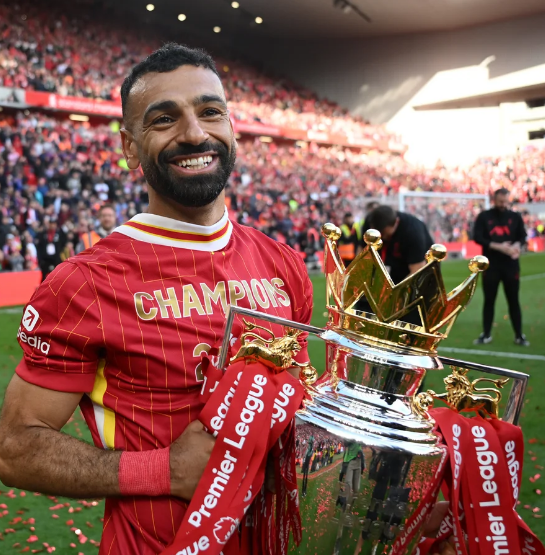
    When Mohamed Salah arrived at Anfield in 2017 for £34m, the football world was skeptical. He had already struggled in England once before with Chelsea. No one—not the fans, the scouts, or even manager Jurgen Klopp—could have predicted that this signing from Roma would rewrite Liverpool’s history books.

    Now, the “Egyptian King” is preparing for his final match, leaving behind an era defined by trophies, unmatched work ethic, and sheer joy.

    Breaking Records, Making History

    Salah didn’t just play football; he revolutionized what it meant to be a professional athlete. His obsession with hard work and physical recovery pushed Liverpool to the absolute top of world football.

    The numbers he leaves behind are staggering:

    • 257 Goals: Flying past club legends like Steven Gerrard and Kenny Dalglish. Only Ian Rush and Roger Hunt have scored more.
    • 119 Assists: Proving he was never just a selfish goalscorer, but a complete team player.
    • 193 Premier League Goals: The highest number ever scored by an overseas player in the history of the competition.
    • 94 Minutes: How often he either scored or created a goal for Liverpool.

    “He took it to a different level,” legendary striker Ian Rush told BBC Sport, noting that Salah even brought a great sense of humor to the dressing room.

    The Deadly Trio and the Drive for Greatness

    At the peak of his powers, Salah formed a legendary frontline alongside Sadio Mane and Roberto Firmino. Together, stars from Egypt, Senegal, and Brazil created a footballing magic that terrified rivals like Pep Guardiola. While it was no secret that Salah and Mane were fierce rivals behind the scenes, that exact competition pushed them both to achieve greatness.

    Salah’s journey from a rural Egyptian village to the throne of Anfield is a testament to his single-minded drive. He wasn’t a loud leader, but as captain Virgil van Dijk shared, he led entirely by example. Salah leaves Liverpool not just as a goalscorer, but as an icon who changed the club’s standards forever.

  • Nvidia’s Vera chip is the US$200 billion bet Jensen Huang doesn’t want you to overlook

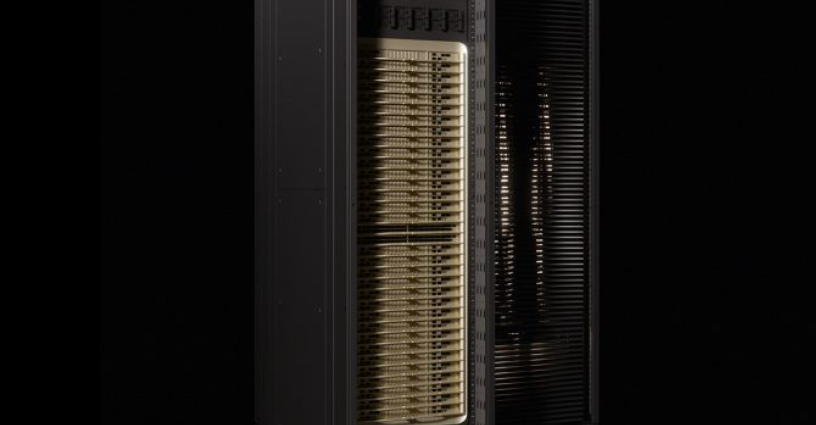
    The Nvidia Vera chip is rarely the headline when earnings beat estimates, but it should be. When Nvidia reported Q1 revenue of US$81.62 billion on Wednesday, beating analyst estimates of US$78.86 billion, and guided Q2 at US$91 billion–well above Wall Street’s US$86.84 billion forecast–the numbers did what Nvidia numbers always do: dominate the room. 

    But buried in CEO Jensen Huang’s conference call with analysts was something more strategically interesting than another quarterly beat. Huang told analysts that Nvidia’s new Vera central processors unlock access to a US$200 billion market, one that sits entirely outside the US$1 trillion the company has already forecast from its Blackwell and Rubin AI GPU lineup between 2025 and 2027. 

    He expects Vera chip revenue to hit US$20 billion by the end of this fiscal year. “I expect (Vera) to be the second largest” sales contributor, Huang said during the call.

    That’s not a footnote. That’s a second front.

    The Vera chip and the inference pivot

    The reason Nvidia needs a second front is straightforward: its biggest customers are building their own. Google, Amazon, and Microsoft–collectively expected to pour more than US$700 billion into AI infrastructure this year, up sharply from around US$400 billion in 2025, are simultaneously pouring funds into custom silicon to run AI models. Intel and AMD are also touting CPUs as a credible play for inference workloads. 

    The narrative in the chip industry has shifted from who can train the biggest model to who can serve it cheapest and fastest. Inference is where Nvidia’s GPU dominance is most exposed. Training large models is still firmly Nvidia territory, but inference, generating answers at scale, in real time, is increasingly where custom chips from Google’s TPU line, Amazon’s Trainium and others are making their case.

    Nvidia’s answer is Vera. The chip, developed in part using technology from Groq, a startup specialising in inference that Nvidia licensed in a deal reportedly worth around US$17 billion, targets exactly this workload. The full Vera Rubin platform, which combines the Vera CPU with Rubin GPUs, is set to launch later this year.

  • OpenAI opens Singapore AI lab as IMDA updates AI framework

    OpenAI will open its first Applied AI Lab outside the US in Singapore. The lab is part of a new partnership with the Ministry of Digital Development and Information.

    The initiative, called OpenAI for Singapore, was announced at the ATx Summit and is backed by a commitment of more than S$300 million.

    The lab will create more than 200 Singapore-based technical roles over the next few years. OpenAI said Singapore will also become one of its global hubs for forward-deployed engineers who will work with organisations on AI deployment. OpenAI said the lab’s work will be aligned with Singapore’s AI Mission priorities which include public service, finance, and digital infrastructure.

    Focus on deployment and talent

    The company will work with government agencies and local partners on education and workforce programmes within the Ministry of Education and GovTech. OpenAI also plans to support educators through a Singapore chapter of the OpenAI Academy, participate in the National AI Impact Programme, and run Codex for Teachers hackathons.

    The partnership includes plans to work with local partners on accelerator programmes for AI-native startups in the form of workshops for micro-entrepreneurs and small businesses, covering how founders and SMEs can use AI in operations and customer service.

    Chng Kai Fong, Permanent Secretary for Digital Development and Information, said Singapore’s response to AI includes growing new sectors, anchoring global frontier companies, and equipping workers with relevant skills.

  • Moon is getting farther away from Earth each year, report finds

    (NewsNation) — With NASA’s Artemis II mission in the rear mirror, new information has emerged about how far the moon continues to move away from the Earth.

    A report from Space Daily says the moon is receding from Earth at 3.8 centimeters per year.

    “That number is small enough to sound trivial. It is not,” Space Daily states. “The same measurement, extended forward, eliminates an astronomical phenomenon that human beings happen to be alive at exactly the right moment in geological time to witness.”

    The development results from tidal friction, the site notes.

    Friction occurs as Earth’s oceans bulge under the moon’s gravity. Consequently, the days lengthen on Earth by about 1.7 milliseconds per century, and the moon spirals outward because it’s gaining orbital energy.

  • Trump says negotiations with Iran in final stages, warns of attacks if deal fails

    DUBAI/WASHINGTON: U.S. President Donald Trump said on Wednesday that negotiations with Iran were in the final stages, while warning of further attacks unless Iran agrees to a deal.

    Six weeks since Trump paused Operation Epic Fury for a ceasefire, talks to end the war have shown little progress so far. Trump has said this week he came close to ordering more attacks, but held off to allow more time for negotiations.

    “We’re in the final stages of Iran. We’ll see what happens. Either have a deal or we’re going to do some things that are a little bit nasty, but hopefully that won’t happen,” he told reporters on Wednesday.